

Recycling symbols on packaging are meant to help people dispose of materials properly—but in reality, they often create confusion. A triangle does not always mean “recyclable,” a number on plastic does not guarantee curbside acceptance, and many labels depend on where your customer lives. This guide explains the most common packaging recycling symbols, what they actually mean, and how to use them correctly across bottle packaging, jar packaging, pump & dispenser, flexible packaging, paper boxes, cosmetic packaging, pharmaceutical containers, supplement packaging, and daily chemical packaging.
Why recycling symbols are confusing
Recycling symbols mix together three different things:
- Material identification
What the packaging is made from. - Recyclability claims
Whether it can be recycled in a real system. - Waste instructions
What the consumer should do right now.
Many symbols only identify material and do not promise recyclability. Some are industry marks, not government recycling approvals. And acceptance rules vary widely by country, state, and even city.
Start with the most important rule
A packaging symbol is only useful if it matches:
- Your target market’s collection system
- The packaging design details such as color, labels, coatings, liners
- The consumer’s ability to separate components
If you sell in multiple countries, you may need different symbols or clearer instructions per region.
The Mobius Loop symbol
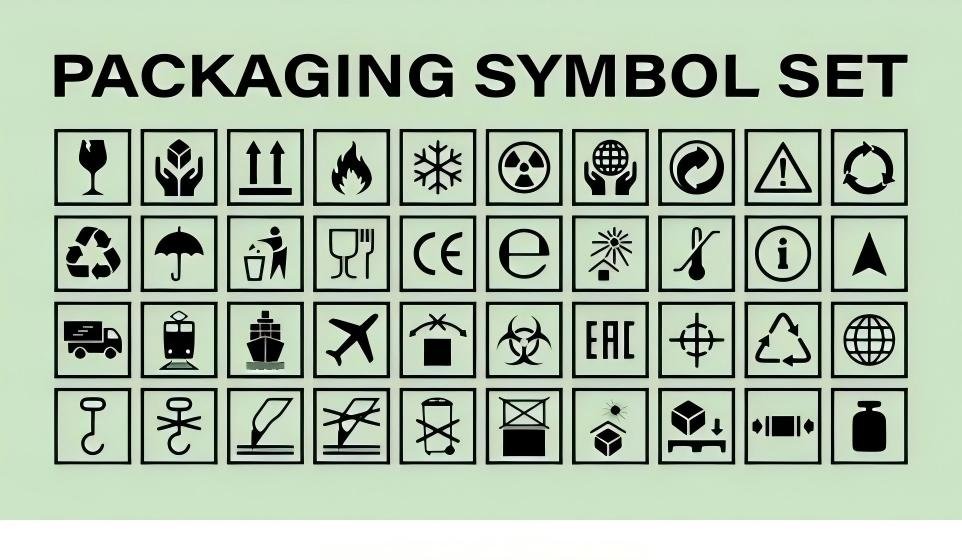
The Mobius Loop is the classic “three chasing arrows” triangle.
What it can mean in practice:
- Sometimes it means recyclable
In some systems it is used as a general recycling indicator. - Sometimes it means made with recycled content
Especially when a percentage is shown inside or near the symbol. - Sometimes it is only a general environmental icon
And does not reflect local acceptance.
What to do as a brand:
- Don’t assume the Mobius Loop alone is enough. Add clear text instructions such as “Recycle bottle” or “Recycle carton,” and confirm acceptance in your main markets.
The resin identification code for plastics
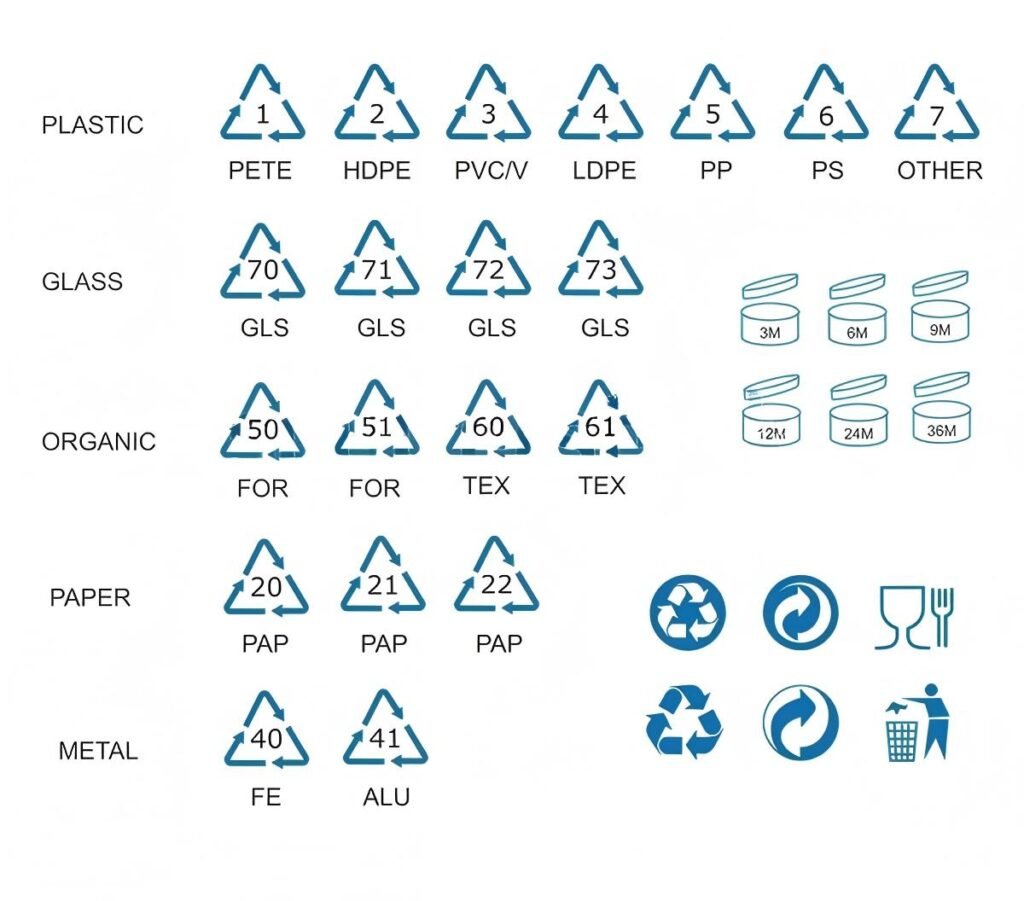
The triangle with a number inside is commonly called the plastic recycling number. Technically, it is a resin identification code, not a guarantee the item is recyclable in your customer’s bin.
Common codes you will see:
- 1 PET or PETE
Often accepted for bottles in many regions. Widely used in beverage and personal care bottles. - 2 HDPE
Often accepted for bottles such as shampoos, cleaners, and supplement containers. - 3 PVC
Less commonly accepted. Avoid for many consumer packs where possible. - 4 LDPE
Often used in films and bags. Frequently requires store drop-off rather than curbside. - 5 PP
Increasing acceptance, often used in caps, closures, and jars, but acceptance varies. - 6 PS
Often limited acceptance and can be problematic, especially for foam. - 7 Other
A catch-all category that may include mixed plastics and bio-based plastics. Acceptance varies greatly.
Why the code can be misleading:
- A package can be “1 PET” but still be rejected due to a full-body shrink sleeve, heavy pigmentation, or incompatible components.
- A “4 LDPE” film may be recyclable only through special collection programs.
How2Recycle labels
In many markets, especially North America, you may see How2Recycle labels that give clearer disposal guidance than generic icons.
Typical instructions include:
- “Recycle”
- “Check locally”
- “Store drop-off”
- “Not yet recycled”
- Component-level labels such as “Bottle: Recycle” and “Pump: Not yet recycled”
Why it matters:
- It separates material identification from real disposal action.
- It helps prevent overclaiming recyclability.
Brand best practice:
- Use component-level instructions for packs with multiple materials, especially pump & dispenser packaging.
The Green Dot symbol
The Green Dot symbol is two arrows in a circle.
What it means:
- In many European contexts, it indicates the producer has contributed financially to a packaging recovery scheme.
- It does not automatically mean the packaging is recyclable or recycled.
What to do:
- Don’t use it as a recyclability claim. Use it only where required and appropriate, and pair with clear consumer disposal guidance.
The Tidyman symbol
The Tidyman is a person throwing waste into a bin.
What it means:
- It is an anti-litter symbol encouraging proper disposal.
- It does not mean recyclable.
How to use it:
- It can support cleanliness messaging, but don’t rely on it for sustainability claims.
Paper recycling symbols and certifications
Paper packs often carry a mix of recycling marks and forestry certifications.
Common paper-related marks include:
- Mobius Loop for recyclability
- “PAP” material codes in some systems
- Forestry certifications such as FSC
Important distinction:
- FSC is not a recycling symbol. It relates to responsible sourcing of virgin fiber, not whether the item is recyclable.
Brand guidance for paper boxes:
- Avoid plastic lamination, metallized finishes, and complex mixed materials if you want the carton to remain widely recyclable.
Compostable and biodegradable symbols that people confuse with recycling
Many consumers place compostables into recycling bins, which can contaminate recycling streams. Compostability marks are not recycling marks.
Common compostability marks include:
- Industrial compostable certifications
- Home compostable certifications
- Compost seedling-style logos in certain regions
Key reality:
- Compostable items should go to compost where accepted, not recycling.
- If your market lacks compost collection, compostable packaging may end up as general waste.
Brand best practice:
- If you use compostable packaging, add a plain-language instruction line that matches your market.
Aluminum, steel, and glass recycling marks
Metal and glass are among the most recyclable packaging materials, but symbols still vary.
Aluminum recycling
Aluminum is highly recyclable, but some small components can be missed by sorting systems.
Brand tips:
- Use standard shapes where possible.
- Encourage consumers to keep caps attached if local guidance recommends it, or remove them if required. Local rules vary.
Steel recycling
Steel packaging such as tins can be recyclable, but coatings and mixed parts should be minimized.
Glass recycling
Glass is widely recyclable in many regions. Color and local sorting systems can change outcomes.
Brand tips for glass bottle packaging and jar packaging:
- Design protective shipping packaging to reduce breakage.
- Provide clear “rinse and recycle” guidance when appropriate.
Component-level recycling is critical for pumps and dispensers
Pumps, triggers, and sprayers are among the biggest reasons a package becomes “not recyclable” in practice.
Why:
- Mixed plastics
- Metal springs
- Small parts that fall through sorting screens
Consumer-friendly guidance that helps:
- “Remove pump. Recycle bottle.”
- “Reuse pump with refill bottle.”
Brand strategy options:
- Use recyclable pump designs where available
- Use refill systems so the pump is reused longer
- Simplify materials and component count
For many brands, improving pump strategy is the difference between “mostly recyclable” and “truly recyclable by design.”
How to read symbols by packaging type
Bottle packaging
Most common materials:
- PET or HDPE bottles with PP caps
What to check beyond symbols:
- Label material and adhesive compatibility
- Sleeve coverage and removability
- Colorants that affect sorting
Best instruction style:
- “Rinse. Replace cap. Recycle bottle.”
Jar packaging
Most common materials:
- Glass jars with metal or plastic caps
- PET or PP jars
What to check:
- Inner seals and liners
- Labels that peel cleanly
Best instruction style:
- “Recycle jar. Remove liner if present.”
Flexible packaging
Most common materials:
- PE films, PP films, multi-layer laminates
What symbols often fail to communicate:
- Many flexible packs are not curbside recyclable even if they have a resin code.
Best instruction style:
- “Store drop-off” where programs exist
- “Not recyclable” where no collection exists
- Avoid vague recycling icons that cause contamination
Paper boxes
Most common materials:
- Paperboard cartons with coatings and inks
What to check:
- Plastic windows
- Lamination
- Heavy foil effects
Best instruction style:
- “Recycle box with paper.”
Cosmetic packaging
Cosmetics often include complex components:
- Pumps, droppers, mixed materials, decorative finishes
Best practice:
- Provide a simple disposal sequence on-pack or via QR:
- Separate pump
- Recycle bottle
- Dispose of pump as directed
Pharmaceutical containers
Pharma packaging focuses on compliance:
- Child-resistant closures
- Tamper evidence
- High-barrier requirements
Best practice:
- Avoid misleading recyclability claims if compliance components reduce recyclability.
- Focus on clear, accurate instructions and simplified secondary packaging.
Supplement packaging
Common materials:
- HDPE bottles, PET jars, PP caps
Best practice:
- Use clear material choices and straightforward instructions.
- Avoid overly complex shrink sleeves that reduce recycling success.
Daily chemical packaging
Common materials:
- HDPE bottles, triggers, pumps, refill pouches
Best practice:
- Encourage reuse where possible:
“Keep trigger. Refill bottle.” - Provide clear instructions for refill pouch disposal based on local programs.
How brands should choose the right recycling symbols
Recycling labels are part of product compliance and brand trust. Use this checklist before printing symbols.
Confirm local acceptance
- Check your top sales regions first.
- If acceptance differs, use market-specific packaging or market-specific instructions.
Avoid generic symbols without instructions
A triangle icon alone often causes “wishcycling,” where consumers put non-recyclables into recycling.
Use component-level labeling for multi-part packs
Especially for:
- Pump & dispenser systems
- Mixed material closures
- Packs with liners or inner lids
Align artwork with recyclability
Your decorative choices can reduce recyclability even if the base material is accepted:
- Overprinting and heavy inks
- Metallized effects
- Permanent mixed laminations
Keep claims defensible
If you claim “recyclable,” ensure:
- It is accepted in the markets you sell in
- The packaging design meets design-for-recycling guidance
- You have supplier documentation to support the claim
Common mistakes consumers make and how to prevent them
Mistake: believing the resin code means curbside recyclable
Fix:
- Add “Check locally” or “Store drop-off” where needed.
Mistake: recycling pumps with bottles
Fix:
- Add “Remove pump” instructions, or design a reuse/refill system.
Mistake: recycling coated or laminated paper as paper
Fix:
- Avoid lamination if you want paper recyclability, and state the correct disposal route.
Mistake: placing compostables into recycling
Fix:
- Separate compostable and recyclable messaging clearly. Don’t mix symbols.
FAQ
Does the triangle symbol mean my packaging is recyclable
Not always. The triangle can indicate recyclability, recycled content, or simply be used as a general environmental icon. Always verify local acceptance and provide clear instructions.
Do plastic numbers 1 to 7 mean the package will be recycled
No. They identify the plastic resin type. Actual recycling depends on local collection, sorting capability, and packaging design details like labels, colors, and mixed components.
Why do pumps and dispensers often say not recyclable
Many pumps include mixed plastics and metal springs and are difficult for sorting facilities to process. Brands can improve outcomes with recyclable pump designs, reuse strategies, or clear separation instructions.
What is the most reliable way to label recycling instructions
Use a recognized labeling system where applicable, provide component-level guidance, and make the disposal action clear in plain language.
Packaging labeling and recyclable design support from Supply-Packagings
Supply-Packagings provides supply packagings for everything, including Bottle Packaging, Jar Packaging, Pump & Dispenser, Flexible Packaging, Paper Boxes, Cosmetic Packaging, Pharmaceutical Containers, Supplement Packaging, and Daily Chemical Packaging. If you want your recycling symbols to be accurate and your packaging to be recyclable in real-world systems, we can help you:
- Select materials and structures aligned with design-for-recycling guidance
- Simplify components and improve separability
- Recommend clear labeling and disposal instructions by market
- Balance sustainability with performance, compliance, and brand aesthetics
Share your product type, target sales regions, and current packaging structure, and we can suggest the most practical recycling-label approach for your next packaging update.