

Frozen foods can be one of the safest and most convenient product categories—until the packaging fails. Cracked films, weak seals, freezer burn, odor transfer, or ink migration can quickly turn a high-quality frozen product into customer complaints, refunds, and regulatory risk. This guide explains how to choose safe packaging for frozen foods, focusing on real-world performance at low temperatures and the compliance basics you need to protect your brand.
What “safe packaging” means for frozen foods
For frozen foods, “safe” has three layers:
- Food-contact safety
The packaging material must be compliant for direct food contact in your target market and suitable for fat, salt, acidity, and long storage times. - Cold-temperature physical safety
Packaging must resist cracking, pinholes, seal failure, and impact damage at freezer temperatures. - Product protection and shelf-life safety
Packaging must prevent freezer burn, oxidation, dehydration, and odor pickup so the food stays within quality specs through the full supply chain.
A package can be “food grade” but still unsafe for frozen use if it becomes brittle, leaks, or allows moisture loss.
Why frozen food packaging fails in real life
Most frozen packaging problems come from predictable stress points:
- Cold brittleness and cold-crack when films are flexed, dropped, or squeezed
- Seal failure caused by contaminated seal areas, poor seal design, or the wrong sealant layer
- Puncture and abrasion from sharp frozen edges, ice crystals, or corners of inner packs
- Moisture loss leading to freezer burn, texture damage, and weight loss
- Oxygen ingress causing oxidation, color changes, and off-flavors
- Odor transfer inside freezers and distribution environments
- Print/ink rub-off and weak adhesives at low temperatures
The best approach is to match packaging structure to your frozen product’s shape, moisture sensitivity, and distribution route.
Key factors to evaluate before choosing packaging
What type of frozen product is it
Different products demand different packaging performance:
- Frozen meat, seafood, poultry
- Frozen vegetables and berries
- Frozen ready meals and tray meals
- Frozen bakery items
- Ice cream and frozen desserts
How will it be frozen and packed
- Blast freezing vs slow freezing
- Product temperature at sealing
- Moisture/condensation near seal area
- Manual packing vs automated packing
What is the distribution model
- Retail freezer shelves
- E-commerce home delivery with dry ice/gel packs
- Wholesale pallets with long storage time
- Export shipments with higher vibration and handling
These details determine seal design, puncture resistance, and barrier needs.
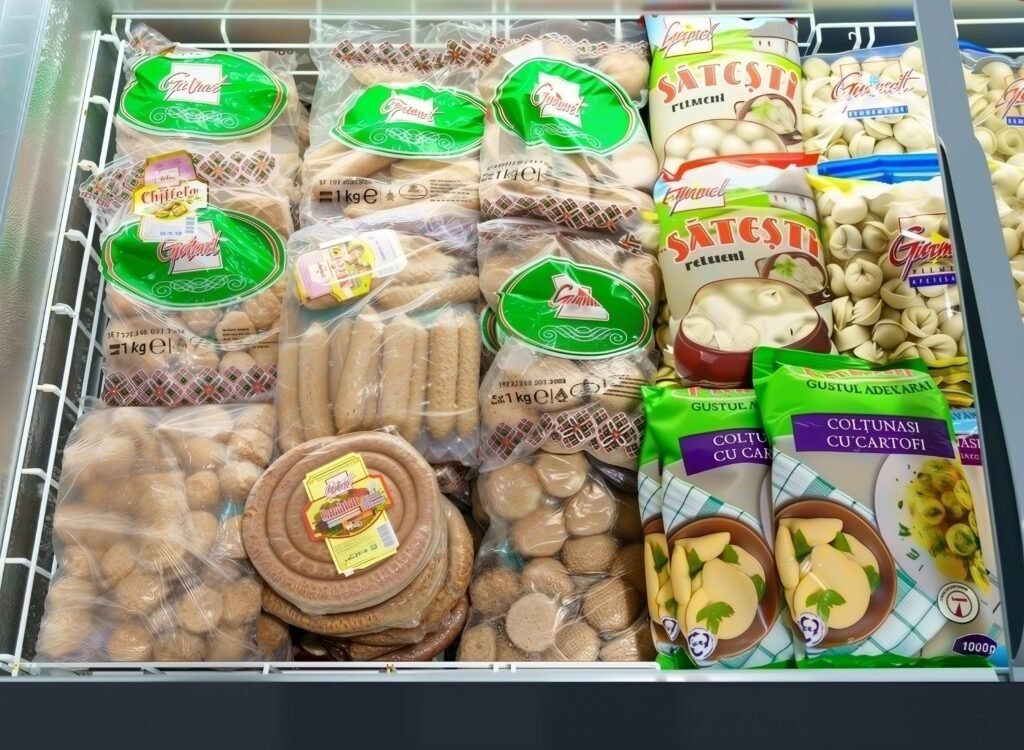
The most common safe packaging formats for frozen foods
High-performance flexible packaging pouches and bags
This is the dominant format for frozen foods because it is lightweight, efficient, and scalable.
Best for:
- Frozen vegetables, berries, fries, nuggets, dumplings
- Portions of meat and seafood
- IQF products with sharp edges
What to prioritize:
- Cold-crack resistance
- Strong seals and seal contamination tolerance
- Puncture resistance
- Moisture barrier for freezer burn control
Lidded trays with lidding film
Used for frozen ready meals and portion-controlled foods.
Best for:
- Ready meals and prepared foods
- Multi-compartment meals
- Products needing shape retention
What to prioritize:
- Tray-to-lid seal integrity at low temperature
- Impact resistance during distribution
- Consistent peel/weld strength and leak prevention
- Oil and sauce resistance if applicable
Paper boxes and outer cartons
Paper cartons are usually secondary packaging, but they matter for protection, branding, and freezer performance.
Best for:
- Frozen meals, ice cream, and premium retail presentation
- Multi-unit inner packs
- Shelf-ready and display-ready packaging
What to prioritize:
- Moisture resistance and scuff/crush resistance
- Glue performance at low temperature
- Print durability (freezer rub and condensation)
Bottles and jars for frozen sauces or concentrates
Less common, but relevant for certain frozen food ingredients.
Best for:
- Sauce bases, concentrates, syrups intended for freezing
- Premium take-home food items
What to prioritize:
- Headspace design for expansion
- Closure and liner compatibility at low temperatures
- Breakage prevention if using glass
Material choices that perform better in freezers
Frozen food packaging is often multi-layer. The goal is to combine toughness, sealability, and barrier.
Polyethylene films
Common types include LDPE and LLDPE.
Strengths:
- Excellent low-temperature flexibility
- Good sealability
- Widely used as inner sealant layers
Limitations:
- Oxygen barrier is limited unless combined with barrier layers
Polypropylene
Used in some films, trays, and rigid components.
Strengths:
- Good heat resistance for processing
- Can work in frozen conditions with proper design
Limitations:
- Can become more brittle than PE in some applications; structure matters
PET
Often used in trays, some films, and laminated structures.
Strengths:
- Good stiffness and clarity
- Useful for outer layers in laminates
Limitations:
- Can crack if used incorrectly in flexible structures for deep-freeze impact conditions
PA nylon
Often used to improve puncture resistance in vacuum bags and high-stress pouches.
Strengths:
- Strong puncture and abrasion resistance
- Useful for meat/seafood and sharp products
Limitations:
- Moisture barrier is not its main advantage; needs balancing layers
EVOH and foil barrier layers
Used when oxygen barrier is critical.
Strengths:
- Strong oxygen barrier supports flavor and color stability
- Helpful for fatty foods and long storage times
Limitations:
- Barrier performance depends on full structure and storage conditions; seals must still be strong
Food-contact compliance basics you should not skip
“Safe” also means compliant. Requirements differ by market, but your supplier should support documentation aligned to where you sell.
Common frameworks:
- United States: FDA food-contact requirements
- European Union: EC 1935/2004, EU 10/2011 for plastics, GMP requirements
- China: GB 4806 series and related standards
What to request from your packaging supplier:
- Food-contact declaration of compliance for your target market
- Material composition and specifications
- Any applicable migration testing information
- Ink and adhesive compliance statements for printed flexible packaging and cartons
- Intended-use limitations such as temperature range, fat contact, microwave/oven suitability
If a supplier only says “food grade” without documents, treat that as a risk—especially for printed laminates and coatings.
How to prevent freezer burn with smarter packaging
Freezer burn is mostly about moisture loss and surface dehydration.
Packaging features that reduce freezer burn:
- Strong moisture barrier films
- Correct film thickness and toughness to avoid pinholes
- Tight sealing with minimal trapped contamination
- Reduced headspace or better product fit where possible
- Faster freezing processes that reduce large ice crystal formation
Operational tip:
Even excellent film cannot compensate for weak seals. Many “freezer burn” complaints start as micro-leaks.
Seal integrity is the make-or-break factor
For frozen foods, seals must survive:
- Immediate freezing stress
- Handling impacts
- Vibration in transit
- Long-term storage in freezers
Key seal-related checks:
- Seal width and consistency
- Seal strength at both room temp and freezer temp
- Resistance to seal contamination (moisture, oil, crumbs)
- Easy-open behavior without tearing into the product area unintentionally
If you use zippers or reclose features:
- Ensure zipper performance at cold temperature
- Confirm consumers can reseal easily without cracking the zipper area
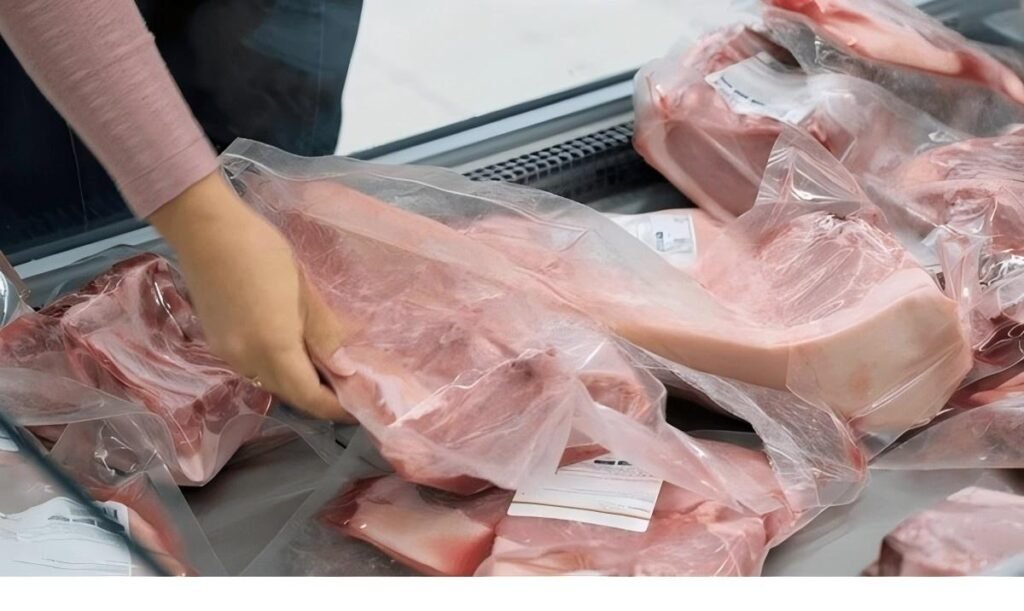
Packaging recommendations by frozen food category
Frozen meat and seafood
Main risks:
- Puncture from sharp frozen edges
- Oxidation and odor transfer
- Seal failure during handling
Best packaging directions:
- Tough, puncture-resistant flexible packaging structures
- Consider nylon layers for puncture resistance
- Add oxygen barrier layers if shelf life is long or product is fatty
- Strong seals and careful seal-area cleanliness
Frozen vegetables and fruit
Main risks:
- Pinhole formation, seal leaks, dehydration
- Package tearing during handling and stacking
Best packaging directions:
- PE-based tough structures with good low-temp flexibility
- Reinforced seal design for heavy bag loads
- Optional reclose zippers for consumer convenience
Frozen ready meals
Main risks:
- Tray seal leaks, corner impacts, crushed cartons
- Sauce contact and oil resistance requirements
Best packaging directions:
- Tray + compatible lidding film with validated seal performance
- Outer paper box designed for freezer humidity and stacking
- Scuff-resistant printing and glue suitable for cold storage
Ice cream and frozen desserts
Main risks:
- Odor pickup, scuffing, moisture exposure on cartons
- Lid or closure integrity for tubs
Best packaging directions:
- Strong barrier where aroma protection matters
- Durable cartons and coatings that survive freezer handling
- Tight-fitting closures and clear tamper evidence if needed
Safety checklist for frozen food packaging selection
Use this checklist to make decisions faster and reduce risk:
Material and compliance
- Food-contact compliant for your sales markets
- Suitable for fat contact if product is oily
- Ink and adhesive compliance confirmed for printed packs
Low-temperature performance
- Cold-crack resistance validated
- Drop and impact performance checked
- Puncture resistance matched to product shape
Seal and closure
- Seal strength validated at freezer temperature
- Seal contamination tolerance evaluated
- Zippers or reclose features function in cold conditions
Shelf-life protection
- Moisture barrier adequate to prevent freezer burn
- Oxygen barrier adequate to prevent oxidation when needed
- Odor transfer risk addressed for long storage
Logistics
- Packaging survives vibration and compression in cartons
- Outer packaging and paper boxes resist freezer moisture and scuffing
- Packaging remains readable and presentable after handling
Testing you should run before mass production
Frozen food packaging should be validated with real conditions, not only lab assumptions:
- Freeze-thaw cycling to check brittleness, seals, and print durability
- Drop tests at cold temperature (not only room temperature)
- Puncture tests using your real frozen product geometry
- Seal integrity tests including leak detection
- Storage tests for freezer burn and odor pickup over time
- Carton compression tests for pallet stacking and long storage
Testing costs far less than a recall, relabel, or widespread refund wave.
Common mistakes to avoid
- Choosing a film based on “barrier specs” but ignoring cold-crack toughness
- Assuming a room-temperature seal test reflects freezer performance
- Using sharp products in thin film without puncture reinforcement
- Over-relying on outer cartons while inner packs pinhole
- Printing heavily without verifying ink rub resistance in freezer handling
- Using adhesives or glues in cartons that weaken in cold, humid environments
How Supply-Packagings can support frozen food packaging
Supply-Packagings provides supply packagings for everything, including Flexible Packaging, Paper Boxes, Bottle Packaging, Jar Packaging, Pump & Dispenser, and more. For frozen food brands, we can help you choose packaging structures that balance food-contact compliance, low-temperature toughness, seal reliability, and shelf-life protection, while also supporting branding and scalable production.
If you share your frozen product type, target shelf life, storage temperature, packaging format preference, and sales markets, we can recommend practical packaging options designed to stay safe and perform reliably in real freezer conditions.