
Choosing between glass cosmetic containers and plastic cosmetic containers is one of the most important packaging decisions a beauty brand will make. The right choice affects product stability, customer perception, shipping breakage risk, sustainability performance, total landed cost, and how easily customers can recycle or reuse your packaging. This guide breaks down the real-world pros and cons of glass vs. plastic for cosmetic bottles, cosmetic jars, and closures, with practical recommendations for skincare, haircare, and personal care brands.
Quick comparison: glass vs plastic cosmetic containers
| Factor | Glass cosmetic containers | Plastic cosmetic containers |
|---|---|---|
| Product protection | Excellent barrier, strong chemical resistance | Varies by resin and design; can be excellent with the right material |
| Weight and shipping | Heavy, higher freight cost, higher emissions in long-distance shipping | Lightweight, lower freight cost, often better for e-commerce |
| Breakage risk | Higher without proper protective packaging | Low; typically more impact resistant |
| Premium perception | Very strong premium and “luxury skincare” signal | Can be premium, but requires good design and finishes |
| Sustainability | Highly recyclable; strong for reuse/refill | Can be highly recyclable if designed well; PCR options can reduce virgin plastic |
| Recycling reality | Good where glass is collected; color and region matter | Depends heavily on resin type, labels, color, pumps, and local systems |
| Cost | Often higher (material + shipping + breakage protection) | Often lower at scale; PCR and premium finishes can increase cost |
| Decoration | Great for frosting, coatings, screen printing | Great for labels, direct print; more options for lightweight customization |
What matters most before you choose
Before comparing materials, define the non-negotiables for your product:
- Formula sensitivity to oxygen, light, and contamination
- Viscosity and dispensing needs: cap, pump, dropper, airless
- Sales channel: retail shelf vs DTC e-commerce vs Amazon
- Sustainability goal: recyclable, refillable, PCR content, plastic reduction
- Target markets and local recycling realities
- Budget and lead time constraints
A glass jar may look premium, but if it increases breakage and returns in e-commerce, the total impact can be worse than a well-designed recyclable plastic jar.
Pros of glass cosmetic containers
Strong barrier and stability support
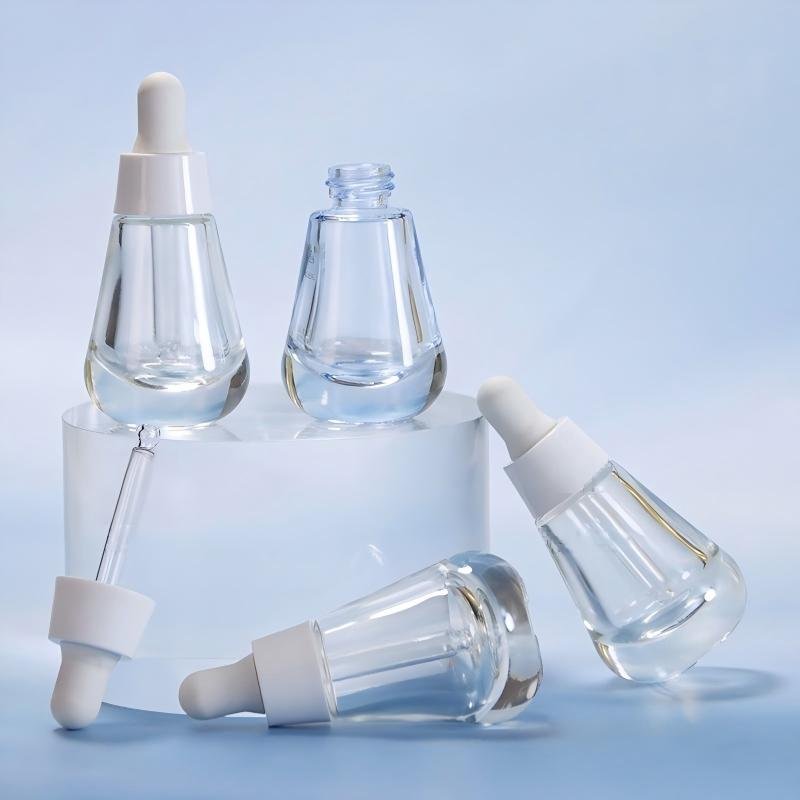
Glass is naturally non-porous and provides excellent protection against oxygen and moisture transfer. This is valuable for products where stability and sensory performance must stay consistent over time.
Common winners for glass:
- Serums and oils
- Fragrance-adjacent skincare
- Creams in premium jar packaging
- Formulas with essential oils or actives that may interact with some plastics
Premium shelf presence
Glass communicates “premium” instantly through weight, clarity, and feel. For many skincare categories, the glass bottle silhouette or heavy-feel jar can increase perceived value and help justify higher pricing.
High recyclability and reuse potential
Glass is widely recognized as recyclable and can be recycled repeatedly. It is also well-suited for reuse and refill programs, which can significantly reduce packaging footprint per use if customers actually participate.
Chemical resistance
Glass is generally compatible with a wide range of cosmetic ingredients. This reduces risk for certain aggressive formulas, although closures, liners, and pumps still require compatibility testing.
Cons of glass cosmetic containers
Higher shipping cost and higher breakage risk
Glass is heavier and more fragile than plastic. In DTC shipping, glass often requires:
- Stronger corrugated shippers
- Inserts such as molded fiber trays or corrugated partitions
- More careful pack-out standards
All of this increases cost and complexity. Breakage doesn’t just waste packaging—it wastes product and triggers reshipments.
Higher carbon in long-distance shipping scenarios
Because glass is heavy, shipping emissions can rise when you ship long distances or air freight is involved. For many brands, the best approach is:
- Lightweight glass designs where possible
- Optimized secondary packaging
- Regional sourcing and fulfillment
Not always convenient for travel and daily use
Customers may avoid traveling with glass. For on-the-go categories, plastic often improves usability and reduces “drop anxiety.”
Pros of plastic cosmetic containers
Lightweight and shipping-efficient
Plastic is dramatically lighter, which can reduce:
- Freight cost
- Dimensional weight pressure
- Damage rate
- Carbon emissions from transport in many scenarios
For e-commerce-heavy brands, a well-designed plastic bottle or jar can be a strong business and sustainability decision.
Design flexibility and scalability
Plastic offers broad options for:
- Shapes and ergonomics
- Color matching
- Integrated features for dispensing
- High-speed production scalability
This is especially useful for daily-use products like cleansers, lotions, shampoos, and body care.
Recycled-content options
Plastic packaging can be improved significantly with PCR materials:
- rPET for clear bottles and some jars
- rHDPE for durable opaque bottles
- rPP for caps and closures in some applications
PCR reduces reliance on virgin resin and supports circular material markets when paired with recyclable-by-design structures.
Impact resistance
Plastic is much less likely to break. This reduces returns, customer dissatisfaction, and product loss—often an underappreciated sustainability lever.
Cons of plastic cosmetic containers
Compatibility depends on resin and formula
Not all plastics behave the same. Some formulas (especially essential oils, solvents, high fragrance loads, or certain actives) can cause:
- Stress cracking
- Warping
- Odor absorption or scalping of fragrance
- Permeation that affects product performance over time
This is why compatibility and stability testing is non-negotiable.
Recycling depends on design details
A plastic container being technically recyclable is not enough. Real-world recyclability depends on:
- Resin type
- Color and pigments
- Labels and adhesives
- Sleeves and decoration
- Closures and pumps
For example, a PET bottle can become hard to recycle if it uses a full-body shrink sleeve that blocks sorting or incompatible label materials.
Consumer perception challenges
Some premium customers still associate plastic with lower value or higher environmental concern. Brands often address this with:
- High-quality finishes and consistent design
- PCR content communication
- Refill systems
- Reduced secondary packaging
Glass vs plastic by packaging format
Bottle packaging
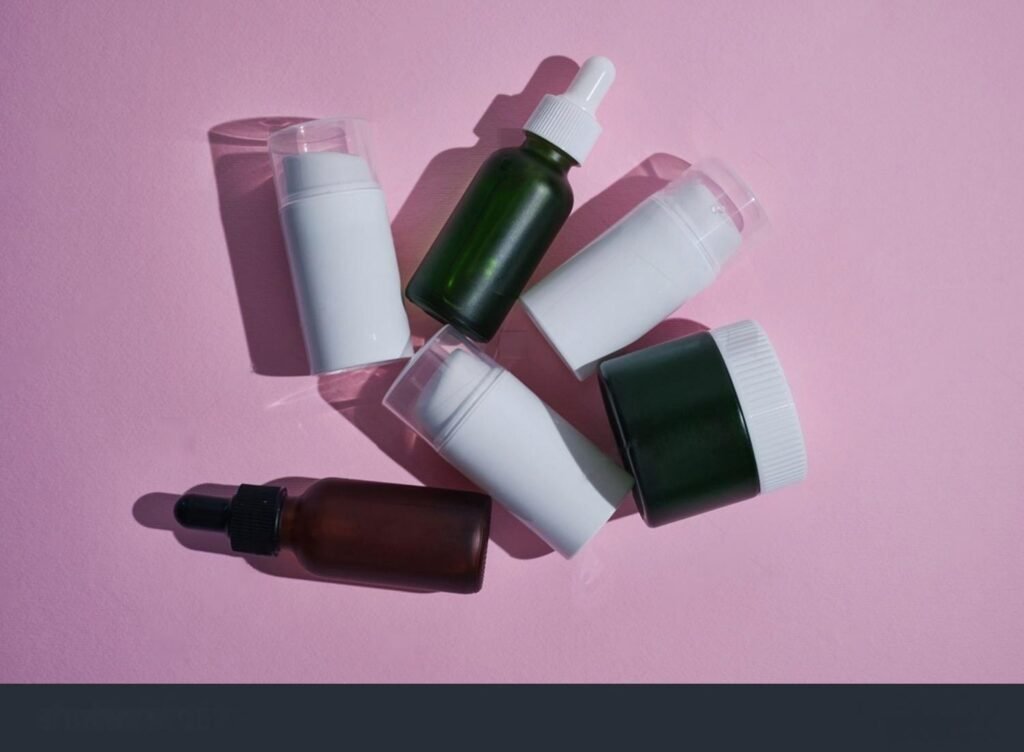
Glass bottle packaging is popular for serums, oils, and premium actives because it feels luxurious and stable.
Plastic bottle packaging (PET or HDPE) is often best for cleansers, lotions, and high-frequency products where shipping and durability matter.
Practical tip: if you need a pump & dispenser, plastic often reduces breakage risk, but pump design and locking features become critical for leak prevention.
Jar packaging
Glass jars look and feel premium, but they are heavy and breakable.
Plastic jars (often PP or PET) are lighter and more shipping-friendly, especially for e-commerce.
Practical tip: if you use a jar for hygiene-sensitive formulas, consider airless jars or inner lids regardless of glass or plastic.
Pump and dispenser systems
Most pumps are mixed-material assemblies. Your sustainability and recycling strategy should address:
- Pump reuse via refill programs
- Simplified pump designs
- Clear instructions such as “Remove pump. Recycle bottle” where appropriate
Glass vs plastic alone will not solve pump recyclability challenges.
Sustainability reality: which is greener
The honest answer is: it depends on your system.
When glass tends to be more sustainable
- You sell locally or regionally and shipping distances are shorter
- You can implement reuse/refill and customers adopt it
- Your target markets have strong glass recycling infrastructure
- You can reduce breakage with proper protective packaging
When plastic tends to be more sustainable
- You ship long distances or primarily via e-commerce
- You optimize for lightweighting and right-sizing
- You use PCR content and design for recycling
- You reduce damage and returns by using impact-resistant packaging
The best sustainability outcome often comes from system design, not material ideology.
How to choose the right container for your skincare line
Step 1: Match material to formula risk
- Oxygen-sensitive actives: consider airless systems, opaque options, or glass with protective design
- Essential oils and high fragrance: validate plastic compatibility; glass often reduces risk
- Water-based daily products: plastic may be the most practical choice at scale
Step 2: Choose based on channel
- DTC e-commerce: plastic reduces breakage; glass requires strong inserts and testing
- Retail premium shelf: glass often lifts perceived value
- Subscription and refills: plastic bottles with reusable pumps can be highly efficient
Step 3: Align with your sustainability claim
If you plan to claim “recyclable” or “sustainable,” make sure the full pack supports it:
- Container resin choice
- Label and adhesive design
- Sleeve decisions
- Closure and pump strategy
- Clear disposal guidance
Step 4: Test before scaling
At minimum:
- Compatibility and stability testing
- Leak testing for closures and pumps
- Drop and vibration testing for shipping
- Label scuff and adhesion testing for real handling
Common mistakes brands make
- Choosing glass for premium positioning but under-investing in protective packaging, causing breakage
- Choosing plastic without PCR and without design-for-recycling details, then making weak sustainability claims
- Ignoring pumps and dispensers when claiming “100% recyclable” packaging
- Using heavy decoration or full sleeves that reduce real recycling success
- Skipping compatibility testing and discovering stress cracking after launch
FAQ
Is glass always better for cosmetic packaging
No. Glass is excellent for premium feel and barrier performance, but it can increase shipping emissions and breakage risk. For e-commerce-heavy brands, well-designed plastic with PCR content can outperform glass in total system sustainability and cost.
Which plastic is best for cosmetic containers
It depends on the product and design goals. PET is common for clear bottles, HDPE for durable opaque bottles, and PP is common for caps and many jars. The best choice depends on compatibility, dispensing needs, and local recycling systems.
Is glass packaging more recyclable than plastic
Often yes in consumer perception, and glass can be recycled repeatedly. However, real outcomes depend on local collection and contamination. Plastic can also be highly recyclable when kept mono-material, properly labeled, and designed without sorting blockers.
What is best for sensitive skincare actives
Airless systems and packaging that limits oxygen/light exposure are often best. That can be glass or plastic depending on design. Always validate with stability testing for your exact formula.
Cosmetic packaging solutions from Supply-Packagings
Supply-Packagings provides supply packagings for everything, including Bottle Packaging, Jar Packaging, Pump & Dispenser, Flexible Packaging, Paper Boxes, Cosmetic Packaging, Pharmaceutical Containers, Supplement Packaging, and Daily Chemical Packaging. If you’re deciding between glass vs plastic cosmetic containers, we can help you:
- Select the right material based on your formula and channel
- Choose closures, pumps, and liners that reduce leakage and improve user experience
- Integrate PCR options and recyclable-by-design details
- Engineer protective packaging to reduce breakage for glass
- Build a practical packaging roadmap for premium positioning and sustainability goals
Share your product type, formula characteristics, target markets, and sales channel, and we’ll recommend the most suitable container strategy for your brand.