
Compostable coffee cups sound like the perfect solution: keep the convenience of takeaway while avoiding landfill waste. But in real café and restaurant operations, the answer is more complicated. Whether compostable coffee cups are a “myth” or a “reality” depends on what the cup is made of, which certifications it truly has, and—most importantly—whether your city actually collects and processes compostable packaging. This guide explains how compostable cups work, what claims are trustworthy, what usually goes wrong, and what eco-smart coffee brands should do in 2026 and beyond.
What people mean by compostable coffee cups
When customers say “compostable cup,” they usually mean one of these:
- A paper cup that can break down like paper in compost
- A “bioplastic” lined cup that composts instead of using plastic
- A cup that can go into a green bin with food waste
- A cup that is “eco-friendly” and better than standard lined paper cups
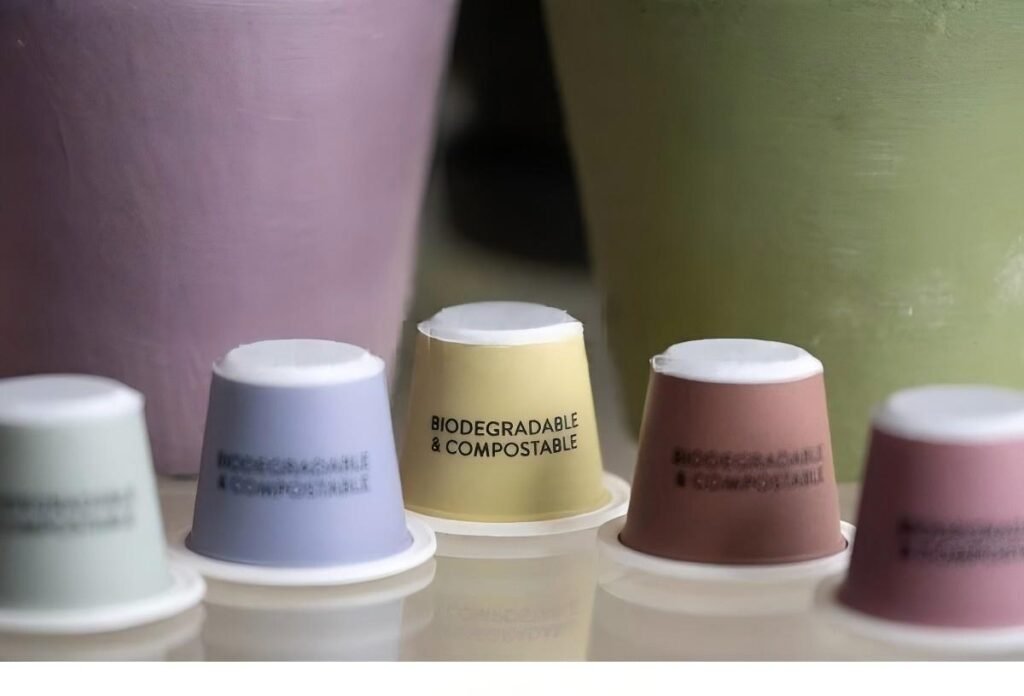
In packaging terms, compostable means the cup is designed to disintegrate and biodegrade in composting conditions within a defined timeframe, and that the resulting compost is non-toxic—but only when it meets a recognized standard and is processed correctly.
Compostable vs biodegradable vs recyclable
These terms get mixed up and cause expensive mistakes.
- Compostable: Must meet a composting standard (often industrial composting) and break down without toxic residue.
- Biodegradable: Often vague without a timeframe and defined environment. “Biodegradable” does not automatically mean suitable for compost bins.
- Recyclable: Must be accepted, sorted, and reprocessed in your area. Many lined paper cups are not widely recyclable due to plastic linings.
Key takeaway: A cup can be compostable but not realistically composted if collection and processing are missing.
How a coffee cup is built and why it matters
Most takeaway coffee cups are not “just paper.” They are usually:
- Paperboard cup wall
- Barrier lining inside to prevent leaks
- Often a rolled rim and heat-sealed bottom
- A separate lid (commonly plastic or compostable bioplastic)
- Optional sleeve and stirrer
The lining is the make-or-break component. Without it, hot liquids soak through. With it, the cup becomes a multi-material structure that may be difficult to recycle and may or may not be compostable.
The big myth: “If it says compostable, it will compost anywhere”
This is the #1 reason compostable cups fail to deliver environmental benefits.
In many regions:
- Industrial composting facilities do not accept compostable packaging at all
- Facilities accept food waste only, not “compostable plastics”
- Compostable cups require a longer composting cycle than facilities are willing to run
- Compostables get screened out as contamination
So compostable coffee cups are absolutely possible as a material technology—but they’re only a real sustainability solution when the local compost system supports them.
What compostable coffee cups are usually made from
PLA lined paper cups
PLA is a plant-based plastic often used as a lining.
What to know:
- PLA lined cups are typically industrial compostable, not home compostable
- They may not break down in backyard compost (too cold, too inconsistent)
- If your city does not accept compostable packaging, PLA cups often go to landfill
Aqueous lined paper cups
Some cups use water-based or dispersion coatings instead of a traditional plastic film.
What to know:
- Performance varies widely by supplier and coating chemistry
- Some designs aim to improve fiber recovery or compostability
- Claims must be validated for the finished cup structure, not just the coating
Fiber-based cups with certified compostable coatings
Some paper cups are designed specifically to meet compostability standards.
What to know:
- Certification should cover the finished cup, including inks and adhesives where relevant
- Not all “eco” cups are certified compostable
Cup lids
Even if the cup is compostable, the lid might not be.
Common lid types:
- PP plastic lids
- PLA or other compostable lids
- Fiber lids with barrier layers
A “compostable cup” paired with a non-compostable lid creates confusion and contamination.
Certifications that make compostable claims real
If you want compostable coffee cups to be reality—not marketing—ask for proof.
Common compostability standards and marks include:
- EN 13432
- ASTM D6400 for compostable plastics
- ASTM D6868 for compostable coatings on paper
- BPI certified compostable (common in North America)
- OK compost Industrial
- OK compost Home (much stricter and less common for hot cups)
Operational rule: If there is no recognized certification, treat “compostable” as a claim—not a fact.
Are compostable coffee cups better than regular cups
Sometimes yes, sometimes no. The answer depends on end-of-life.
Compostable cups can be better when
- Your city or venue has compost collection
- The compost facility accepts certified compostable packaging
- Staff and customers are trained to dispose correctly
- The cup system includes compatible lids, sleeves, and straws
Compostable cups are not better when
- They go to landfill anyway
- They contaminate paper recycling streams
- They increase packaging cost while creating no real diversion benefit
- They are used for long-distance takeaway where performance issues cause leaks and product waste
A real sustainability plan must include disposal logistics—not only materials.
Why compostable cups often fail in cafés and restaurants
The bin problem
If compostables are placed in recycling, they can contaminate recycling. If placed in trash, they don’t compost. Without clear bins and signage, customers guess—and guessing creates waste.
The facility acceptance problem
Many composting facilities reject packaging (even certified) because:
- It looks like plastic contamination
- It doesn’t break down fast enough in their process
- They don’t want the risk of non-certified items entering the stream
The “coffee contamination” problem
Cups often contain liquid residue. That can make some recycling systems reject them. Composting is often the better end-of-life route for food-soiled packaging—but only if the compost route truly exists.
The lid mismatch problem
A compostable cup with a plastic lid (or vice versa) reduces the system’s effectiveness unless components are clearly separated and accepted.
A practical decision framework for coffee businesses
Use these questions to decide whether compostable cups are worth it for your operation.
1. Do you have access to compost collection
- On-site green bin pickup
- Shopping mall or campus compost program
- Citywide organics program that accepts compostable packaging
If the answer is no, compostable cups are often a branding choice, not a waste-diversion solution.
2. Does the compost facility accept compostable packaging
Ask your waste hauler or municipality directly. Don’t assume.
3. Can you control disposal behavior
Compostables work best in controlled settings:
- cafés with staff-managed bins
- office and campus environments
- events with waste station attendants
In uncontrolled street disposal, benefits drop sharply.
4. Can you standardize the full system
Choose compatible:
- cup
- lid
- sleeve
- straw or sip lid
- any inner bags or carriers
Mixed systems increase contamination and customer confusion.
Better alternatives if composting isn’t realistic
If compostable cups are not supported in your area, these strategies often deliver better real-world outcomes.
Reduce and reuse
- Offer discounts for bring-your-own cup
- Use deposit-return reusable cup systems in high-density areas
- Add in-store ceramic cups for dine-in
Reuse often beats any single-use material swap.
Improve recyclability where possible
- Choose packaging components that match local recycling streams
- Use clear disposal instructions
- Simplify materials to reduce sorting failure
Focus on right-sizing and quality
Leaks and double-cupping increase material use. Better cup insulation and fit can reduce waste.
How to implement compostable cups successfully
If you decide compostable coffee cups are right for you, do it as a system:
- Use certified compostable cups and lids from reputable suppliers
- Provide clearly labeled compost bins next to trash and recycling
- Use simple signage: “Coffee cup and lid here”
- Train staff to guide customers during peak times
- Run a 2-week audit: check contamination rates and bin accuracy
- Coordinate with your waste hauler on acceptable materials
Without these steps, “compostable” remains mostly a marketing story.
FAQ
Are compostable coffee cups real
Yes, compostable coffee cups are real as certified products. The bigger question is whether they will actually be composted in your region. Compostability requires the right facility, collection, and correct disposal behavior.
Do compostable coffee cups break down in home compost
Most compostable hot cups are designed for industrial composting, not backyard compost. If you need home composting, look for strict home-compost certifications—but availability is limited for hot liquid cups.
Are compostable cups recyclable
Usually not in standard paper recycling streams. Compostable cups often have special linings that make recycling difficult. They are intended for composting, not recycling.
What should I ask a supplier before buying compostable cups
Ask for compostability certificates for the finished cup, the lid material details, intended composting environment, and written confirmation that inks and adhesives are covered under the certification scope.
Packaging support from Supply-Packagings
Supply-Packagings provides supply packagings for everything, including flexible packaging, paper boxes, bottle packaging, jar packaging, and pump & dispenser solutions for food, beverage, and retail products. If you’re evaluating compostable coffee cups, lids, sleeves, or takeaway packaging systems, we can help you compare material options, verify certifications, and design a practical packaging setup that matches your local disposal infrastructure and brand goals.
Share your drink menu (hot/cold), expected daily volume, service model (dine-in, takeaway, delivery), and your city/region—and we can recommend the most realistic sustainable packaging path.