

Packaging sustainability claims can sound similar, but “biodegradable” and “compostable” are not interchangeable—and using the wrong term can confuse customers, create compliance risk, and undermine your sustainability goals. This blog explains the real difference between biodegradable vs. compostable packaging, how each material breaks down, what certifications matter, and how to choose the right option for formats like bottle packaging, jar packaging, pump & dispenser, flexible packaging, paper boxes, cosmetic packaging, pharmaceutical containers, supplement packaging, and daily chemical packaging.
Quick definitions
Biodegradable packaging
A material that can be broken down by microorganisms into natural substances over time. The problem: the term often does not specify how long it takes, under what conditions, or whether it leaves microplastics.
Compostable packaging
A material designed to break down in composting conditions into carbon dioxide, water, and biomass, typically within a specified timeframe, and without toxic residue. Compostable claims usually rely on recognized standards and certifications.
If you remember one line: Compostable is a specific, testable subset of biodegradable.
Why the difference matters for brands
Choosing the correct claim affects:
- Customer trust and repeat purchases
- End-of-life outcomes (recycling vs compost vs landfill)
- Local regulations and retailer requirements
- Waste management compatibility (industrial compost facilities vs home compost)
- Real carbon footprint (a “green” material that ends up in landfill may not deliver benefits)
For many products, the best sustainability move may still be recyclable packaging with high PCR content, or refill systems, rather than compostables. But if compostable packaging is the right fit, you must specify it accurately.
Biodegradable packaging explained
What biodegradable actually means
“Biodegradable” simply indicates that microorganisms can eventually break a material down. However, without a standard attached, it does not answer the most important questions:
- How long does it take: months, years, decades?
- Where does it biodegrade: soil, seawater, landfill, industrial compost?
- What remains: does it fully mineralize or fragment into microplastics?
- What conditions are required: heat, oxygen, moisture, microbial activity?
Common biodegradable claim pitfalls
- Landfill reality: Many landfills are low-oxygen environments. Even organic materials can degrade very slowly there.
- Oxo-degradable plastics: Some “degradable” plastics break into smaller pieces but may not fully biodegrade—creating microplastic pollution concerns.
- Unverified marketing claims: “Biodegradable” printed on packaging without certification can be considered misleading in some markets.
When “biodegradable” may be appropriate
Biodegradable can be useful when accompanied by a clear, recognized standard and a defined environment, for example: “biodegradable in industrial composting conditions according to X standard.” Otherwise, it’s usually too vague for responsible sustainability messaging.
Compostable packaging explained
What compostable means in practice
Compostable packaging is designed to break down under composting conditions and meet performance criteria such as:
- Timeframe: often around 90–180 days depending on the standard
- Disintegration: material must break down so it’s not visible in finished compost
- No toxicity: compost must support plant growth and not contain harmful residues
- No heavy metals above limits set by the standard
Compostable does not always mean home compostable
Many compostable plastics require industrial composting (higher heat and controlled conditions). If your customers only have access to home composting, an industrial-only compostable pack can still end up as trash.
When compostable packaging is a good fit
Compostable packaging tends to work best when:
- Packaging is likely to be food- or product-contaminated and not recyclable
- You operate in markets with industrial compost collection
- You can provide clear disposal instructions
- Your product format is compatible, commonly flexible packaging, liners, wraps, certain mailers, and some molded fiber applications
Key differences at a glance
| Feature | Biodegradable | Compostable |
|---|---|---|
| Meaning | Breaks down by microorganisms | Breaks down in compost into non-toxic biomass |
| Specific timeframe required | Not necessarily | Usually yes, defined by standards |
| Test standards commonly used | Often unclear unless specified | Commonly certified to ASTM/EN and third-party labels |
| End-of-life destination | Varies, can be ambiguous | Composting facilities or home compost, depending on certification |
| Risk of greenwashing | Higher if unqualified | Lower when properly certified and labeled |
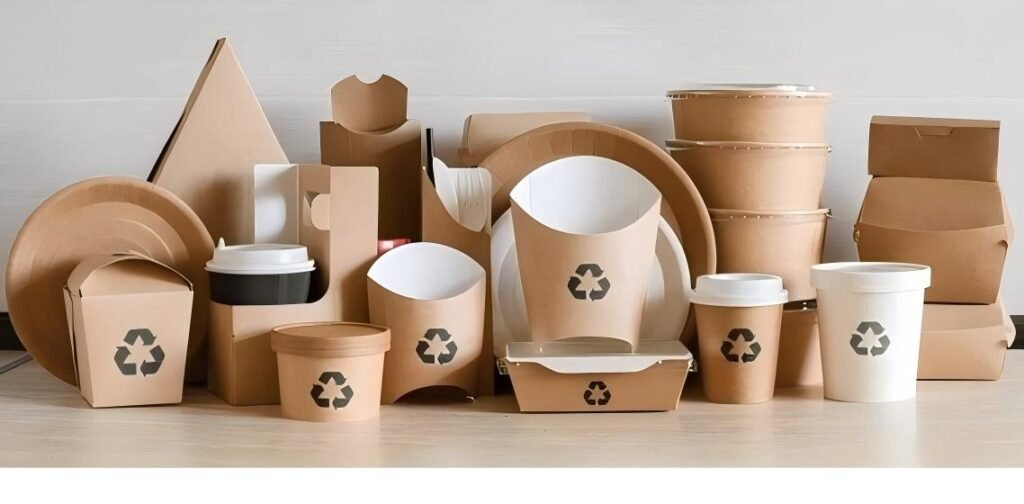
Home compostable vs industrial compostable
Industrial compostable
Industrial composting facilities maintain controlled conditions such as:
- Higher temperatures
- Optimized moisture and aeration
- Active microbial management
- Screening processes
Many compostable plastics (such as PLA blends) are designed for this environment.
Home compostable
Home composting is cooler and less consistent. Home-compostable materials must break down reliably in lower-temperature conditions.
Key takeaway: If your packaging is only industrial compostable, label it clearly and confirm industrial compost access in your target region. If you sell globally, compostability claims must be localized.
Common materials used in biodegradable and compostable packaging
Paper and cardboard
- Often recyclable, and also compostable when uncoated or lightly coated
- Great for paper boxes, sleeves, inserts, and secondary packaging
- Beware plastic lamination, heavy inks, foil stamping, or window films that reduce compostability and recyclability
Molded fiber and bagasse
- Made from recycled pulp or agricultural waste
- Used for trays, inserts, and protective packaging
- Strong fit for protecting glass bottle packaging and jar packaging in shipping
Compostable bioplastics
Common families include:
- PLA blends
- PHA materials
- Other certified compostable compounds
These are most often used in flexible packaging, films, liners, and some specialty components. Performance varies widely depending on formulation and thickness.
Cellulose-based films
- Can be compostable depending on coatings and adhesives
- Useful for windows in cartons, wraps, and certain flexible applications
- Verify certification for the final laminated structure, not just the base film
Important note for pumps and dispensers
Pump & dispenser assemblies are usually mixed-material (multiple plastics + metal spring). Compostable pumps exist in limited cases, but most brands reduce environmental impact more effectively by using:
- Refillable systems
- Design-for-recycling pumps
- Reduced component count and mono-material strategies where feasible
Certifications and standards you should know
Compostable claims should be tied to recognized standards and preferably third-party certification. Common ones include:
- EN 13432
- ASTM D6400 for compostable plastics
- ASTM D6868 for compostable coatings on paper
- BPI certification commonly requested in North America
- OK compost Industrial and OK compost Home marks used internationally
What to request from a supplier:
- The actual certificates for the finished packaging structure
- Scope details: thickness limits, inks, adhesives, coatings included
- Guidance on correct labeling and disposal instructions
If a supplier only says “biodegradable” without providing a standard, ask for:
- Tested environment (soil, marine, compost, landfill simulation)
- Timeframe and residual analysis
- Third-party verification
What to choose for different packaging types
Your best option depends on product needs, barrier requirements, and your customer’s disposal options.
Bottle packaging
For liquids, lotions, and daily chemical formulas:
- Often best: recyclable bottles with PCR content such as rPET or rHDPE
- Compostable bottles are less common and may have performance and infrastructure limits
- If sustainability is the goal, consider refill bottles + refill pouches
Jar packaging
For creams, balms, and supplements:
- Often best: glass jars, aluminum, or recyclable plastics with PCR
- Compostable jars can be challenging due to barrier needs and closure systems
Flexible packaging
This is where compostables are most frequently considered:
- If local industrial composting exists and contamination is likely, certified compostable films can be appropriate
- If composting access is limited, a recyclable mono-material structure may perform better in real-world outcomes
Paper boxes
Paper boxes are a strong sustainability lever:
- Use recycled paperboard and avoid plastic lamination
- If you need barriers, explore coatings certified under standards like ASTM D6868 where applicable
Cosmetic packaging
Cosmetics demand aesthetics and compatibility:
- Consider recyclable primary packaging with PCR content plus paper-based secondary packaging
- Use compostables carefully; many cosmetics are not disposed of in ways that ensure composting
Pharmaceutical containers
Pharma packaging is compliance-driven:
- Compostables are less common due to barrier, stability, and regulation requirements
- Focus on recyclable materials, high-quality labeling, and reduced secondary packaging where possible
Supplement packaging
For supplement bottles and jars:
- Recyclable HDPE or PET with PCR can reduce footprint while maintaining performance
- Ensure closures and labels support recycling
Daily chemical packaging
For shampoos, cleaners, detergents:
- High-impact option: durable bottle + refill pouch strategy
- PCR plastics and simplified components typically deliver reliable emissions reductions
Labeling and communication tips to avoid greenwashing
How you describe your packaging is as important as the material itself.
Do
- Use precise language such as “industrially compostable” or “home compostable”
- Reference recognized standards or certification marks where allowed
- Provide disposal instructions that match local systems
- Keep claims aligned with the finished pack, not just one layer or raw material
Avoid
- “Biodegradable” with no timeframe or environment
- “Compostable” when only a component is compostable
- Claims that suggest compostable packaging will break down in the ocean or in nature
- Overpromising carbon savings without evidence
A good customer-facing line is specific and practical, for example:
“This package is certified industrially compostable where facilities exist. If not available, dispose of it as general waste.”
A simple decision checklist
Use this when deciding between biodegradable vs compostable packaging:
- Do your customers have access to composting?
If no, compostable packaging may not deliver benefits. - Will the packaging likely be contaminated?
If yes, compostables can make sense because contaminated recyclables often get rejected. - Do you need high barrier performance?
If yes, recyclable rigid packaging or specialized recyclable films may be more practical. - Can you switch to reuse or refill?
Reuse/refill often reduces carbon footprint more than material swaps alone. - Can you prove the claim with certification?
If not, avoid vague “biodegradable” claims.
FAQ
Is compostable packaging biodegradable
Yes. Compostable packaging is biodegradable, but it also meets strict requirements for timeframe, disintegration, and non-toxicity under composting conditions. Biodegradable packaging is not always compostable.
Does biodegradable packaging break down in landfill
Often very slowly. Landfills can be low-oxygen and low-activity environments, which can delay degradation for years. That’s why “biodegradable” alone is not a reliable end-of-life solution.
Which is better for the environment: biodegradable or compostable
Neither is automatically better. Certified compostable packaging can be excellent when composting infrastructure exists and recycling is not feasible due to contamination. In many markets, recyclable packaging with PCR content or refill systems can be more effective.
What packaging is best for reducing carbon footprint
Typically a combination of:
- Using less material through right-sizing and lightweighting
- Using recycled content like PCR plastics or recycled paper
- Designing for recycling with mono-material structures
- Introducing reuse and refill programs where possible
Sustainable packaging sourcing with Supply-Packagings
Supply-Packagings delivers supply packagings for everything, including Bottle Packaging, Jar Packaging, Pump & Dispenser, Flexible Packaging, Paper Boxes, Cosmetic Packaging, Pharmaceutical Containers, Supplement Packaging, and Daily Chemical Packaging. If you’re evaluating biodegradable vs compostable packaging for your next product launch, we can help you match the right material and structure to your product, market, and compliance needs—while keeping end-of-life outcomes realistic.
If you share your product type, target countries, packaging format, and sustainability goal, we can recommend the most suitable certified options and the best design approach for performance and disposal.