

Bubble wrap and air pillows are two of the most common cushioning options used in e-commerce and logistics—but they solve different problems. If you choose the wrong one, you’ll see higher damage rates, more returns, and more wasted void fill. This guide compares bubble wrap vs. air pillows in real transit conditions and shows how to pick the best protection for products like bottle packaging, jar packaging, pump & dispenser items, flexible packaging, paper boxes, cosmetic packaging, pharmaceutical containers, supplement packaging, and daily chemical packaging.
What “protects better” really means in transit
Protection is not one feature. A cushioning material must handle multiple risks:
- Shock from drops during sorting and last-mile delivery
- Vibration that causes scuffing, loosens caps, and creates micro-leaks
- Compression from stacking and heavy parcels on top
- Puncture and abrasion from sharp corners, closures, and mixed items in one box
- Movement control inside the shipper
A material that is excellent at filling space may still fail at shock absorption if the product can migrate inside the box.
Quick answer: bubble wrap vs. air pillows
Bubble wrap protects better when
- The item has sharp edges or irregular shapes
- You need wrap-around surface protection
- You need cushioning that still works even if partially compressed
- You ship glass bottles, glass jars, droppers, premium cosmetics, or items with delicate finishes
Air pillows protect better when
- You need fast, lightweight void fill for non-fragile items
- The product is already protected by a strong retail carton
- You need high packing speed and clean presentation
- You’re shipping items that won’t puncture the pillows
In many operations, the best system is a hybrid: wrap the fragile item (bubble wrap or paper wrap) and use air pillows for blocking and bracing.
How bubble wrap works
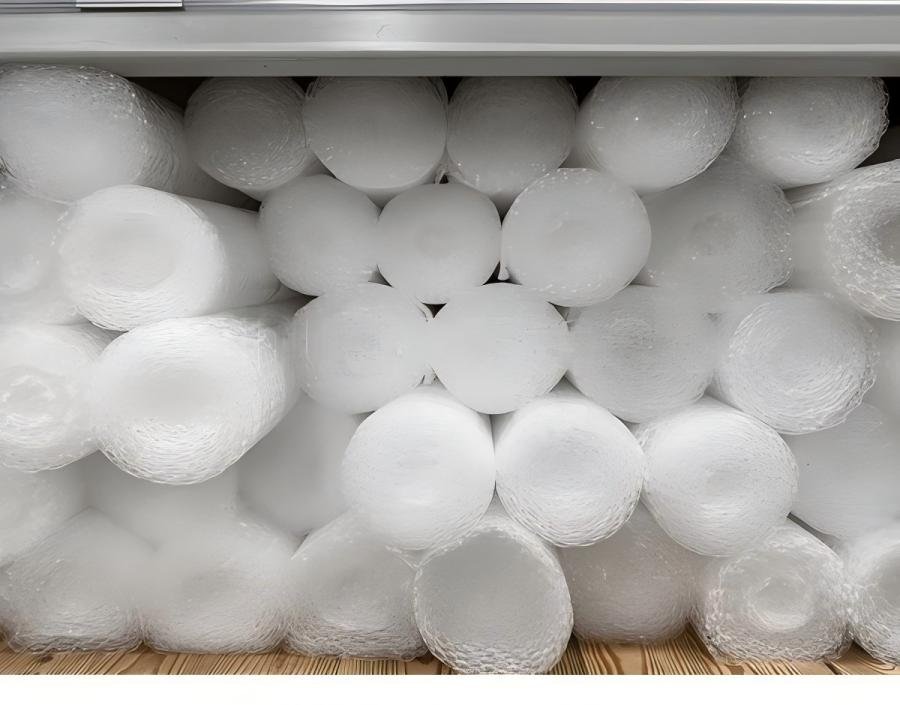
Bubble wrap is a plastic film with trapped air cells that compress under impact to absorb energy.
Strengths of bubble wrap
- Wraps around the product, protecting corners and surfaces
- Better resistance to puncture and abrasion than most inflatable void fill
- Can cushion multiple impact angles when properly wrapped
- Works well for mixed cartons where items might contact each other
Weaknesses of bubble wrap
- Can be slower to pack than air pillows
- Uses more material if applied excessively
- If not secured, it can unwind and allow movement
- Recycling is often difficult in curbside programs in many regions
How air pillows work
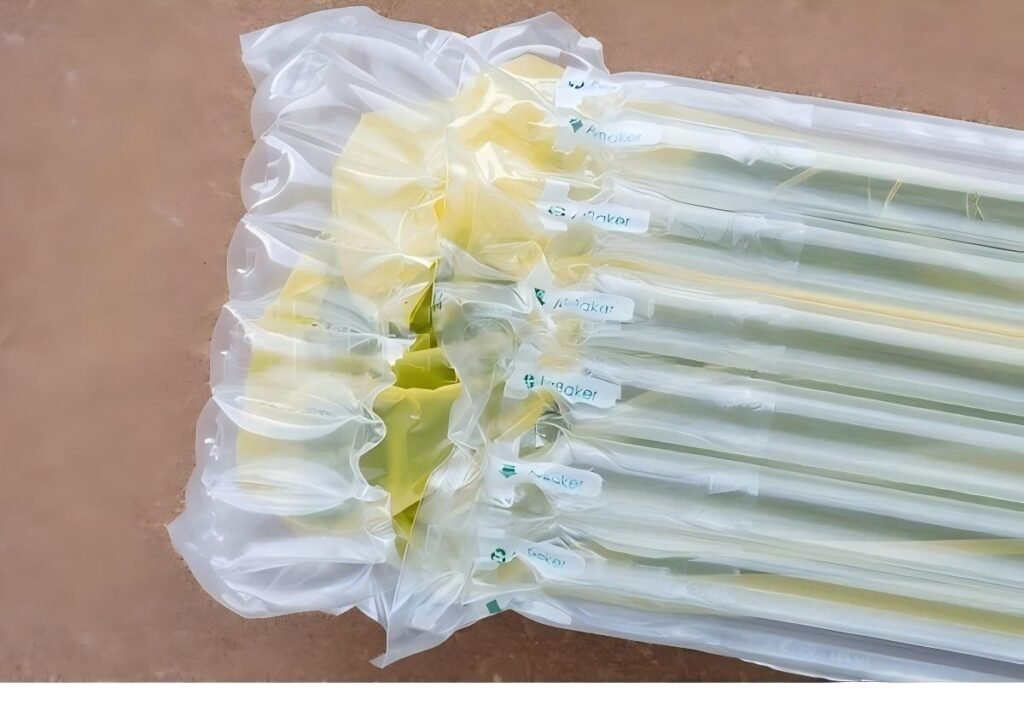
Air pillows are inflatable cushions used primarily to fill empty space and prevent items from shifting.
Strengths of air pillows
- Extremely lightweight, reducing shipping weight
- Fast packing at scale with on-demand inflation systems
- Great for blocking and bracing when used correctly
- Clean unboxing experience and consistent pack appearance
Weaknesses of air pillows
- Vulnerable to puncture, especially from sharp corners or caps
- If a pillow deflates, protection drops sharply
- Not ideal for direct wrapping of fragile glass
- Can fail if the box is oversized and items still move
Shock protection comparison
Drop impacts
- Bubble wrap: Generally stronger for direct shock protection because it stays in contact with the product and cushions at the point of impact.
- Air pillows: Can work well if they are tightly packed and prevent movement, but impacts can “bottom out” if the item shifts or if pillows migrate to one side.
Real-world takeaway
If the item can touch the outer box wall during a drop, protection is at risk. Bubble wrap reduces this risk by creating a consistent buffer around the product.
Vibration and movement control comparison
Long-distance vibration
Vibration causes:
- label scuffing
- cap loosening
- micro-leaks
- abrasion between items
- Bubble wrap: Better at preventing surface-to-surface abrasion when wrapping each item.
- Air pillows: Better at filling space, but not as effective at protecting surfaces if items can rub.
Best practice
For glass bottle packaging and jar packaging, wrap individual units (or use partitions) and then use void fill only to remove remaining space.
Compression comparison
Top-load and stacking pressure
- Bubble wrap: Can compress and still provide some cushioning; layered wraps can help under moderate compression.
- Air pillows: Can burst or leak under sustained compression, especially if the box is overloaded or corners press into the pillows.
Practical rule
If your parcels are likely to be stacked under heavy loads, do not rely on air pillows alone for fragile items. Strengthen the outer shipper and use immobilizing inserts or wraps.
Puncture risk comparison
Puncture is a major divider between these materials.
- Bubble wrap: More resistant to puncture and tearing in mixed shipments.
- Air pillows: High puncture sensitivity; sharp carton corners, metal closures, or broken glass can cause rapid deflation.
High puncture-risk scenarios:
- Shipping pump & dispenser bottles where actuator edges can press into cushions
- Bundling multiple items with rigid edges
- Shipping mixed orders with tools, accessories, or glass + metal combinations
Surface protection and presentation comparison
- Bubble wrap: Excellent scuff protection, but can look less premium if overused or messy.
- Air pillows: Cleaner appearance and quick unboxing, but can be perceived as “wasteful air” if the box is too large.
For premium cosmetic packaging and gift sets, customer perception matters. If you use air pillows, right-size the box to avoid the “too much empty space” impression.
Which one protects better for your product type
Glass bottles
Best choice: Bubble wrap or molded fiber inserts, plus a right-sized box.
Air pillows can be used as secondary blocking, not as the only protection.
Why: Bottles concentrate impact on shoulders and bases; wrap/contact cushioning is more reliable than floating void fill.
Glass jars
Best choice: Bubble wrap + corrugated partitions or molded pulp trays.
Use air pillows only to eliminate leftover voids after immobilization.
Why: Jar rims are high-risk. Jars also transmit impact quickly if they can move.
Pump and dispenser packaging
Best choice: Immobilize the neck and protect the actuator, often with wrap plus bracing.
Air pillows alone are risky because pumps create puncture points and side-load failures.
Why: Pumps and triggers can crack, pop, or misalign under lateral pressure.
Cosmetics and skincare sets
Best choice: Depends on presentation and fragility.
- For premium sets: molded fiber trays or structured inserts
- For individual items: bubble wrap or paper wrap + tight bracing
Air pillows can be good when products are already in strong cartons and you only need void fill.
Pharmaceutical containers
Best choice: Controlled immobilization and scuff prevention, often using partitions or fitted cartons.
Air pillows are fine for void fill when product cartons are rigid and sealed.
Priority: compliance and pack integrity. Avoid materials that shed debris in sensitive packing environments.
Supplement packaging
Best choice: For multi-bottle orders, use dividers; for single bottle, use wrap or snug carton.
Air pillows work well as supplemental fill if puncture risk is low.
Daily chemical packaging
Best choice: Protection must include leak prevention.
- If leaks are possible, air pillows can become ineffective and messy
- Consider secondary containment and immobilization
Bubble wrap can help as a buffer, but the real win is validated closures and right-sized boxes.
The biggest mistake: using void fill to solve immobilization
Air pillows are mainly void fill, not precision immobilization. If the product can still move, you may see:
- corner impacts
- glass-to-glass contact
- cap loosening
- label damage
For fragile items, prioritize one of these immobilization methods first:
- molded pulp insert
- corrugated partition
- custom corrugated wrap
- tight bubble wrap wrap with blocking pads
Then use air pillows only to remove remaining empty space.
How to choose: a simple decision checklist
Choose bubble wrap when you need
- Direct contact cushioning
- Wrap-around corner protection
- Better puncture resistance
- Surface scuff prevention
- Higher reliability across mixed parcel conditions
Choose air pillows when you need
- Fast packing for high volume
- Lightweight void fill
- Clean presentation for non-fragile goods
- Low puncture risk products
- Minimal material use per shipment
Use both when
- You ship fragile products in variable order sizes
- You want strong protection but also fast packing
- You need to block and brace after wrapping the item
Testing: how to confirm which is better for your shipments
Don’t decide by feel—decide by results.
Run controlled tests:
- Drop tests on corners, edges, and faces
- Vibration testing for long-distance routes
- Compression testing for stack loads
- Real carrier trial shipments during normal operations
Track:
- Damage rate by SKU and pack method
- Return reasons and photos
- Packaging material use per order
- Packing time per order
A small change in wrap thickness or pillow placement can outperform switching materials entirely.
Sustainability considerations customers notice
Eco-conscious customers care about two things at once:
- Less waste
- Less damage and fewer replacements
Often the most sustainable choice is the one that prevents product loss with the least total material.
Practical improvements:
- Right-size boxes to reduce the need for any void fill
- Use fitted inserts for fragile glass instead of “lots of cushioning”
- Avoid oversized air pillow volumes that look wasteful
- Consider paper-based cushioning where it meets performance needs
FAQ
Is bubble wrap better than air pillows for fragile items
Often yes, especially for glass and items with sharp edges, because bubble wrap provides direct wrap-around cushioning and resists punctures better. Air pillows work best as void fill when products are already well-protected and not puncture-prone.
Can air pillows replace bubble wrap
They can replace bubble wrap for non-fragile products or products packed in rigid cartons where you only need to prevent movement. For fragile glass bottles and jars, air pillows alone are usually not enough.
Why do air pillows fail in shipping
Common reasons are puncture, deflation, oversized boxes that allow movement, and heavy compression loads. If pillows shift or burst, the product can impact the box wall and break.
What is the most protective packaging for glass
A right-sized corrugated shipper plus immobilization (molded pulp inserts or corrugated partitions) is typically the most reliable. Bubble wrap can be effective, especially when inserts are not feasible, and air pillows can serve as secondary void fill.
Protective packaging solutions from Supply-Packagings
Supply-Packagings provides supply packagings for everything, including Bottle Packaging, Jar Packaging, Pump & Dispenser, Flexible Packaging, Paper Boxes, Cosmetic Packaging, Pharmaceutical Containers, Supplement Packaging, and Daily Chemical Packaging—plus protective packaging systems for transit. If you share your product type, shipping channel, order mix, and current damage rate, we can recommend the right combination of cushioning, inserts, and box sizing to reduce breakage, cut returns, and improve customer experience.