
Sustainable cosmetic packaging in 2026 is shifting from “nice-to-have” to a measurable business requirement. Beauty brands are being pushed by tighter regulations, retailer scorecards, rising packaging fees under EPR programs, and customers who expect clear, credible sustainability claims. The strongest trends are practical ones: higher recycled content, refill systems that actually get used, recyclable-by-design packaging structures, and fewer mixed materials—especially in hard-to-recycle components like pumps and dispensers.
What’s driving sustainable cosmetic packaging in 2026
Regulations and EPR costs are accelerating change
Extended Producer Responsibility programs and packaging waste rules are increasing the financial pressure to use packaging that is easier to recycle and contains recycled content. For many brands, sustainability is now directly linked to cost control and market access.
Retailers want proof, not promises
Major retailers are asking for packaging data such as recyclability status, PCR percentage, and reduction plans. “Eco-friendly” wording without documentation is increasingly treated as greenwashing risk.
Customers still judge sustainability at a glance
Even when customers don’t read the details, they notice the signals: refill options, minimalist secondary packaging, clear disposal guidance, and materials they recognize like glass, aluminum, and paperboard.
Trend 1: Refill and reuse becomes mainstream in beauty
Refillable packaging is one of the biggest sustainability trends for 2026 because it reduces total packaging per use—not just material type.
Where refills are growing fastest:
- Hand wash, body wash, shampoo, conditioner
- Lotions and daily moisturizers
- Some fragrance and premium skincare lines
What “good refill design” looks like:
- A durable primary bottle customers want to keep
- A refill format that is easy to pour and clean
- Clear instructions so customers don’t spill or contaminate product
- A pricing advantage that makes refills feel worth it
Refill formats commonly include flexible packaging refill pouches paired with a reusable bottle packaging system.
Trend 2: PCR content becomes the default expectation
PCR is no longer a niche upgrade—many brands are setting minimum recycled-content targets across product lines.
Common PCR directions in 2026:
- rPET for clear bottles and some jars
- rHDPE for durable bottles in personal care
- rPP for caps and certain jar formats
Key 2026 focus: PCR without sacrificing aesthetics
Brands are learning to manage color variation, clarity differences, and odor control through smarter resin selection and controlled design choices.
Practical warning
PCR claims must be specific and consistent. Use precise language like “Made with 30% post-consumer recycled plastic” and keep supplier documentation on file.
Trend 3: Mono-material packaging design is replacing “mixed innovation”
The fastest path to real recyclability is often simplification, not adding layers.
2026 design priorities:
- Mono-material bottles and closures where possible
- Labels and adhesives compatible with recycling wash processes
- Avoiding full-body shrink sleeves that block sorting
- Reducing metal springs and mixed plastics in closures and dispensers
This trend affects every part of cosmetic packaging, especially pump & dispenser systems.
Trend 4: Pumps and dispensers get redesigned for sustainability
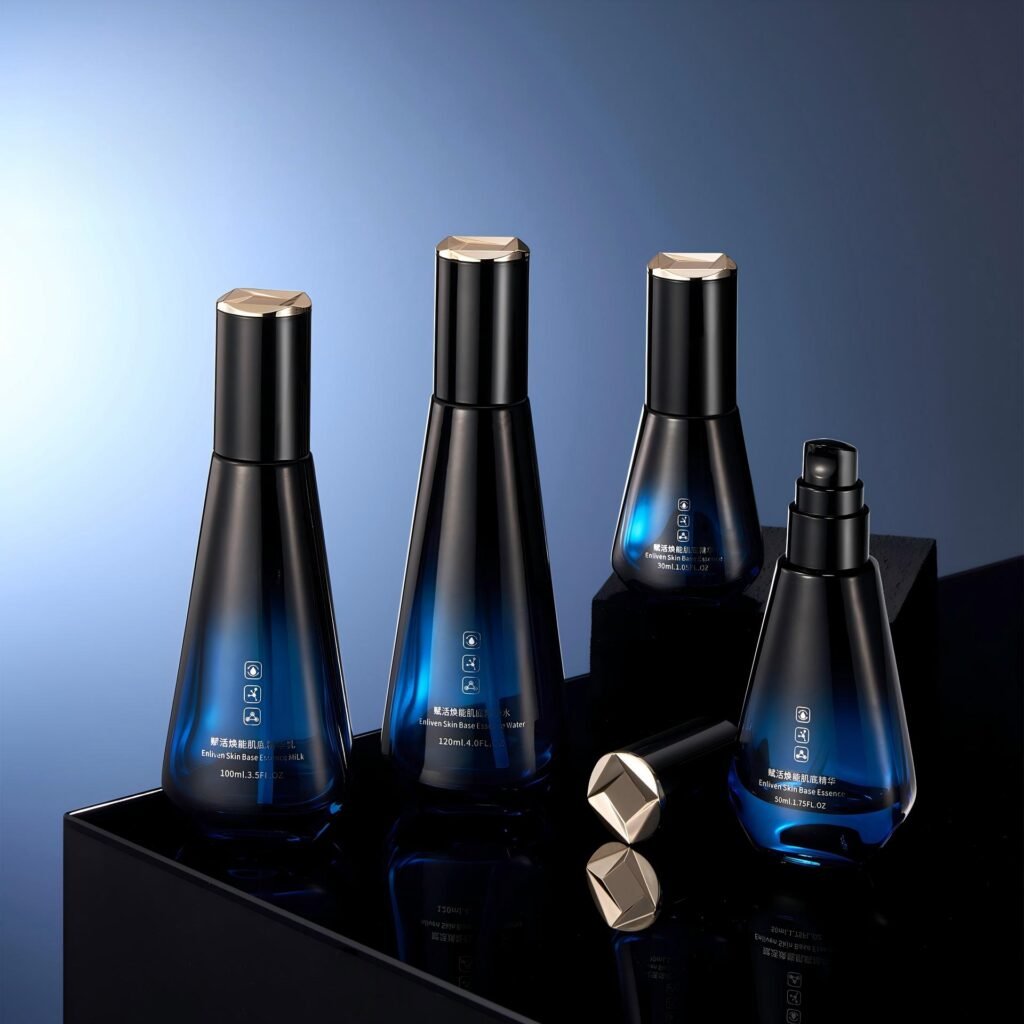
Pumps are one of the hardest parts of cosmetic packaging to recycle because they combine multiple plastics and metal components. In 2026, brands are tackling this with three strategies.
Reuse the pump, replace the bottle
A highly practical approach is to design refill systems where the pump stays with the customer longer, reducing the number of pumps produced and disposed.
Move toward recyclable or simplified pump designs
Where available, brands are selecting pumps with:
- Fewer material types
- Better separability
- Reduced metal content
- Clear consumer removal guidance
Offer alternative dispensing formats when possible
Some products can shift from pumps to:
- Disc-top caps
- Flip-top caps
- Orifice reducers
- Droppers for high-value serums
The sustainability win comes from designing the entire system for realistic end-of-life outcomes.
Trend 5: Lightweighting is back as a major carbon lever
Lightweighting often delivers faster carbon reductions than switching materials. In 2026, more beauty brands are optimizing:
- Bottle wall thickness where performance remains safe
- Jar weight and base thickness
- Cap and overcap sizing
- Secondary packaging size reduction
- Shipping protection that uses less volume and void fill
This matters because shipping emissions and dimensional-weight costs rise quickly when packaging is heavy or oversized—especially for glass.
Trend 6: Secondary packaging gets simplified and “de-luxed”
A big 2026 shift is removing unnecessary layers while keeping premium presentation.
Common changes:
- Smaller paper boxes with less empty space
- Eliminating plastic windows on cartons
- Switching from plastic trays to molded fiber inserts
- Reducing leaflets or moving info to QR codes
- Avoiding heavy lamination that weakens recyclability
For many brands, paper boxes remain important for branding and protection, but the trend is toward “paper-simple” design.
Trend 7: Molded fiber inserts replace plastic trays in premium sets
Molded fiber is being used more in cosmetic sets because it offers:
- Strong product immobilization for shipping
- A premium natural look
- A credible sustainability story when designed correctly
Best uses:
- Protecting glass jar packaging and bottle packaging in gift sets
- Presentation trays for skincare routines
- E-commerce protection that reduces breakage and returns
This trend also supports lower damage rates—often a bigger footprint reducer than changing a single material.
Trend 8: Glass and aluminum stay strong, but with smarter system design
Glass and aluminum remain popular in 2026 for premium positioning and recyclability perception—but brands are getting more realistic about trade-offs.
Glass trends
- More lightweight glass designs
- Higher recycled cullet content targets
- Better protective packaging engineering to reduce breakage
- Refillable glass programs for premium skincare and fragrance
Aluminum trends
- Growth in aluminum bottles and tins for “modern eco-luxury”
- Increased focus on recycled aluminum content
- Better liner/coating compatibility work for cosmetic formulas
The big shift: brands are comparing carbon and logistics performance, not only recyclability.
Trend 9: “Compostable” claims become more cautious in cosmetics
In 2026, cosmetic brands are generally moving away from broad compostable claims unless they can control disposal outcomes. Reasons include:
- Composting access varies by region
- Compostables can contaminate recycling streams if mis-sorted
- Many cosmetics need barriers and components that complicate compostability
- Claim substantiation requirements are getting stricter
Where compostables may still make sense:
- Certain paper-based components
- Specific controlled programs or markets with strong compost collection
- Some secondary packaging applications where certification is clear
For most cosmetics, recyclable-by-design and refill strategies are often more reliable.
Trend 10: Clear on-pack disposal instructions become part of brand trust
“Designed for recycling” only works if customers know what to do. In 2026, more brands are adding:
- Component-level guidance
Example: “Remove pump. Recycle bottle.” - QR codes linking to region-specific disposal pages
- Simple language instead of vague sustainability slogans
- Clear PCR and material statements that customers can understand
This trend is important for complex packaging like pumps, droppers, and multi-part closures.
Trend 11: Digital printing and short-run customization reduces waste
Beauty brands are using digital printing more in 2026 to:
- Avoid overproduction and obsolete inventory
- Run smaller test batches for new SKUs
- Localize labeling for different markets
- Update compliance text faster without scrapping stock
This can reduce waste across labels, paper boxes, and some flexible packaging formats.
Trend 12: Sustainability is being designed into the whole packaging system
Top-performing brands are no longer optimizing one component at a time. They’re redesigning the system:
- Primary pack material and weight
- Closure and dispensing strategy
- Secondary packaging purpose
- Protective packaging for shipping
- End-of-life instructions and customer behavior
A sustainable cosmetic pack that leaks, breaks, or looks “used” on arrival will drive returns and replacements—raising both emissions and cost. Performance remains part of sustainability.
Practical recommendations for cosmetic brands planning 2026 packaging updates
1. Start with your highest-volume SKUs
These deliver the fastest impact and the best ROI on tooling and testing.
2. Pick one primary sustainability goal per product line
Examples:
- Increase PCR content
- Launch a refill program
- Achieve recyclable-by-design in key markets
- Reduce packaging weight by 10–20%
Trying to do everything at once often creates complexity and delays.
3. Fix the hardest component early
For many cosmetics, the hardest component is the pump & dispenser. If you ignore it, the pack may never reach your recyclability or waste goals.
4. Validate with real-world testing
Test:
- Leak resistance with vibration and drops
- Pump locking performance
- Label scuff resistance
- Heat and cold stability
- E-commerce transit performance for glass packs
Common mistakes to avoid in 2026 sustainable cosmetic packaging
- Using compostable packaging where composting isn’t available
- Increasing recycled content without validating odor, appearance, and compatibility
- Making “100% recyclable” claims while ignoring pumps and mixed materials
- Over-lightweighting and causing cracks or leakage
- Adding sustainability messaging without clear disposal instructions
- Switching to glass without redesigning shipping protection and right-sizing
FAQ
What is the biggest sustainable cosmetic packaging trend for 2026
Refill and reuse systems are one of the biggest trends because they reduce total packaging per use. The other major trend is higher PCR content combined with recyclable-by-design structures.
Is PCR plastic always better for cosmetics
Often it reduces reliance on virgin resin, but it must be validated for appearance, odor, and performance. PCR works best when the packaging is designed for recycling and the supply chain can provide consistent quality.
Are glass jars the most sustainable option
Not always. Glass can be excellent for premium and reuse/refill programs, but it is heavy and breakable. For some products and shipping lanes, lightweight PCR plastic can have a lower total footprint.
How can brands make pumps more sustainable
The most practical approaches are reuse through refill systems, simplified recyclable pump designs where available, and clear separation instructions. Pumps are one of the most difficult parts of cosmetic packaging to recycle.
Sustainable cosmetic packaging with Supply-Packagings
Supply-Packagings provides supply packagings for everything, including Bottle Packaging, Jar Packaging, Pump & Dispenser, Flexible Packaging, Paper Boxes, Cosmetic Packaging, Pharmaceutical Containers, Supplement Packaging, and Daily Chemical Packaging. If you’re planning a 2026 packaging refresh, we can help you evaluate sustainable materials, improve recyclability, increase PCR content, design refill systems, and engineer protective packaging so your products arrive safely and look premium.
Share your product type, target markets, packaging format, and sustainability goal, and we’ll recommend practical 2026-ready cosmetic packaging options you can scale confidently.